Why Your AC Runs All Afternoon When the Air Handler Lives in the Attic
A long run cycle on an August afternoon isn't always a broken system, but it is always a clue about your attic.
October 20, 2026 · 4 min read
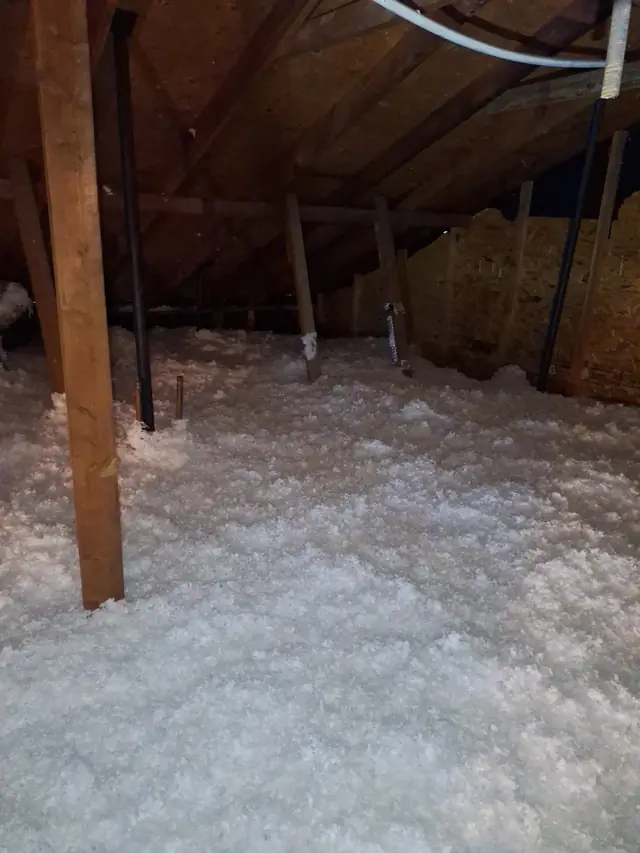
If you live in Tomball, Spring or Cypress, there's a good chance your air handler, your ductwork and most of your supply vents sit in the attic. That's how houses get built around here, especially on a slab foundation, where there's no crawlspace or basement to run anything through. It works fine. But it means your cooling system does its job in the hottest part of the house, and on an August afternoon that shows up as an AC that seems to run from lunch until bedtime without ever shutting off.
Where the afternoon heat actually comes from
The roof deck soaks up sun all day. By mid afternoon the shingles have been baking for hours, and that heat radiates down into the attic air and into everything up there: the framing, the insulation, the ducts, the air handler itself. A Gulf Coast attic in summer can be dramatically hotter than the air outside. Your ducts carry air you just cooled through that space, and every foot of duct is a place where heat can creep back in before the air ever reaches your living room.
Then there's the ceiling. Whatever sits between your bedroom and the attic is the only thing holding that heat back. If the insulation above it is thin, uneven, or got pushed aside during an old repair, the ceiling warms up and radiates it down at you. Rooms directly under the roof, especially on the west side, are usually the ones that never quite get comfortable.
Humidity piles on. The AC isn't only cooling the air, it's pulling moisture out of it, and in muggy Gulf air that takes time. So a long run cycle by itself isn't proof that something is broken. The real question is whether the system is running long and winning, or running long and losing.
Long and winning, or long and losing
Here's a simple way to tell. On a hot afternoon, leave the thermostat where you normally keep it and watch what the house does. If the temperature holds near the setting while the system runs, the AC is keeping up and the attic is just making it work hard. If the house drifts several degrees warmer than the setting by late afternoon and keeps drifting, something is undersized, leaking or restricted. Signs that point to the second case:
- One room, usually upstairs or at the end of a long duct run, is clearly warmer than the rest of the house.
- The air from the vents feels only mildly cool instead of clearly cold.
- The ceiling itself feels warm when you stand under it and the system is running.
- The system runs for hours and the house is still warm at bedtime.
None of those tell you the cause by themselves. A dirty filter, a dirty coil, a low airflow problem or a duct that's come loose can all look the same from the living room. That's why it helps to have someone look at the equipment and the attic together instead of guessing at one or the other.
What changes the attic, not just the AC
Insulation is the first place to look. It's about depth and coverage, not only the number on the bag. Gaps around the attic hatch, around plumbing stacks and along the edges where the roof meets the wall let heat bypass whatever you've laid across the middle. A fresh, even layer of blown-in insulation over the joists, like the one in the photo above, slows the heat that reaches your ceiling.
Ventilation is the second. An attic that can't move hot air out just holds it. Solar attic ventilation uses a roof-mounted fan powered by the sun, so it runs hardest when the roof is hottest. It's a different approach from simply adding more vents, and whether it suits your roof depends on how the attic is built.
The third is the hole most people forget. Pull-down attic stairs and hatches are often a thin, uninsulated panel set in the ceiling of the hallway. An attic tent is an insulated cover that sits over that opening, and it closes off one of the easiest paths for attic heat to drop into the house.
Last, the ducts. Flex duct that has sagged, pulled off a connection or lost its seal cools your attic instead of your den. Sealed joints and properly supported runs matter more in an attic than almost anywhere else, because the air inside is working against a very hot space.
Check the system first, then the attic
Before you put money into insulation or ventilation, make sure the cooling system itself is healthy. A restricted filter, a dirty evaporator coil or a failing part will make an attic problem feel much worse than it is, and fixing the attic won't cure any of them. A technician who is already in your attic to look at the air handler can see the duct condition and the insulation on the same trip.
Dave Lane's Hi-Tech Mechanical has been a family run company since 1976, and its service list covers both sides of this problem: AC repair and installation on one side, attic insulation, solar attic ventilation and attic tents on the other. That means the same crew can look at the equipment and the space around it.
If your AC runs all afternoon and the house still isn't comfortable, call (713) 960-4269 and describe what you're seeing, or read about attic work on the attic insulation page at /services/attic-insulation.
Dave Lane's Hi-Tech Mechanical Inc., (713) 960-4269
Call (713) 960-4269More articles
What "Pulling a Vacuum" Means on a New AC Install, and Why to Ask About It
It's one of the least visible steps of a new installation, and one of the easiest to skip without you ever knowing.
Heat Pump or Gas Furnace for a North Houston Winter?
Most winters here are a handful of cold weeks, which changes the question you should be asking.